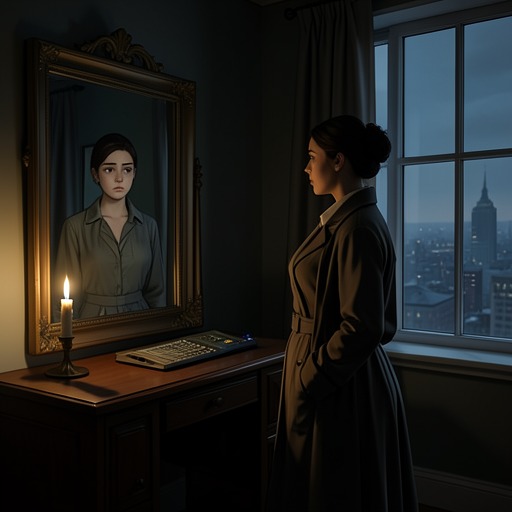
If there is no hope in life, there is no point in living
CEO's Beloved Honey Girl“If there is no hope in life, there is no point in living” is a bleak but defiant expression of emotional survival. In the hospital context, it gives philosophical form to Su Xiangwan’s unwillingness to abandon hope in Lu Xun, even after intimacy has exposed how unequal and painful their relationship remains.
Meaning and Emotional Logic
The expression links the value of continued life to the presence of hope. It does not present hope as a guarantee of happiness; instead, hope functions as the reason to continue enduring uncertainty, disappointment, and pain. Its force comes from the absolute contrast it creates: without hope, living becomes not merely difficult but meaningless.
The wording therefore carries both despair and resistance. Su Xiangwan is not portrayed as confidently expecting Lu Xun’s love. She has already prepared herself for the possibility that Lu Xun will never love her in this lifetime, yet she still refuses to give up hope. The expression names that refusal as a life-sustaining choice rather than a simple romantic fantasy.
The Hospital Context
The expression emerges after Su Xiangwan has struggled to fend off Lu Xun’s advances in the hospital ward. Against someone described as a veteran of love affairs, she feels inexperienced and vulnerable. The scene frames intimacy as a negotiation in which Lu Xun wants something from her without being willing to pay the emotional price she considers necessary. Her objection is therefore not only to desire itself, but to desire detached from reciprocal commitment.
That conflict gives the expression its immediate pressure. Su Xiangwan’s hope persists precisely where her dignity and expectations are threatened. She does not like Lu Xun demanding intimacy while withholding the emotional assurance she wants, but neither does she accept that disappointment should end her capacity to hope. The statement turns the private struggle in the ward into a larger question about what allows a person to remain emotionally alive.
Hope, Choice, and Survival
The expression is closely tied to Su Xiangwan’s position between acceptance and continued attachment. She has intellectually contemplated a future in which Lu Xun never loves her, but emotionally she has not consented to extinguish every possibility. This tension makes hope an active form of persistence: she remains exposed to hurt because abandoning all possibility would cost her the reason to keep going.
Read through the scene’s value shift, the expression moves the emotional stakes from physical attraction to life, meaning, and choice. Lu Xun’s advances create pressure, while Su Xiangwan’s inward response preserves a fragile form of agency. She cannot control whether Lu Xun will love her, but she can refuse to let his lack of certainty determine whether hope remains possible.
Narrative Function and Significance
As a recurring expression, the line condenses the novel’s treatment of love as both a source of injury and a source of endurance. It does not resolve Su Xiangwan’s relationship with Lu Xun, nor does it promise that hope will be rewarded. Instead, it records the emotional condition under which she continues: the possibility of love remains painful, but its disappearance would be even more devastating.
The surrounding actions reinforce this contrast between emotional crisis and ordinary persistence. After buying two small dishes of porridge and magazines, Su Xiangwan returns to the hospital, where Lu Xun’s hearty laughter reveals that his mood is excellent. Her practical care and his easy confidence stand beside the unspoken imbalance described in the expression. Hope thus appears not as an abstract slogan, but as the fragile inner principle that keeps her moving through an unresolved relationship.